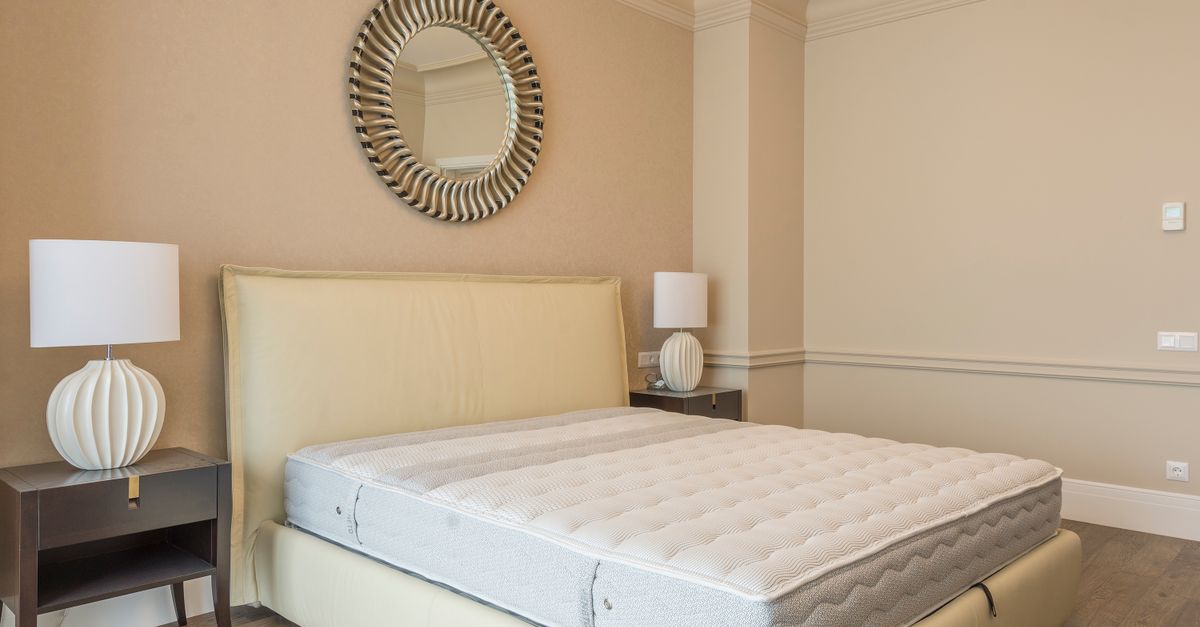
What mattress edge support means
Mattress edge support is the term used to describe how well the sides or perimeter of a mattress resist compression when weight is applied. In plain terms, good edge support means the mattress edge feels stable when you sit or lie near it; poor edge support feels like a sudden drop-off or sink at the border. Edge support is about more than comfort — it determines how much of the sleep surface is usable and how secure you feel moving toward the side of the bed.
A mattress’s edge performance is determined by construction choices made by the manufacturer. Some mattresses incorporate firmer materials around the perimeter to brace the interior comfort layers; others rely on the natural resistance of their support system. The result is a spectrum: some mattresses keep a broad, usable surface well out to the side, while others narrow the practical sleeping area because the edges give way more easily.
- Defines how much weight the mattress edges can bear without collapsing
- Affects how much of the mattress you can sleep on comfortably
- Relates to both immediate feel and long-term performance
Why edge support matters
Edge support affects everyday tasks and how you use a mattress. Firm, stable edges make it easier to sit on the side of the bed to put on shoes, to swing your legs in when getting up, or to share the mattress without feeling like you’ll roll off. For couples, stronger edges increase the area that feels comfortable for sleeping, rather than forcing both people toward the centre.
Edge performance also matters for the mattress’s perceived durability. If the perimeter collapses quickly, that can feel like a loss of usable space and may be one of the first signs of wear for some designs. For people who tend to sit on the edge, sleep near the side, or use the bed with a pet, good edge support is a practical consideration rather than a luxury.
- Makes getting in and out of bed easier, especially for older or taller people
- Expands usable sleep surface when sharing a bed
- Can reduce the need to sleep on the middle only
How mattress construction affects edge support
Different mattress constructions produce different edge characteristics. Mattresses with coil systems — whether traditional innersprings or coil-based hybrids — typically offer a firmer, more buoyant edge because the coils near the perimeter can be designed to resist compression. Some coil systems include firmer perimeter coils or an extra frame around the edges to increase stability.
All-foam mattresses can vary a lot. A foam mattress without edge reinforcement often feels more enveloping and can compress more at the sides, because the foam contours continuously under load. Manufacturers may add denser foam rails or an internal “edge support” layer to reduce that sink. Hybrids blend the two approaches: the foam top layers contour while the coil base helps the edge stay firmer than a pure foam core would on its own.
- Coil-based cores often give firmer, more buoyant edges
- All-foam mattresses rely on denser foam or reinforced rails at the perimeter
- Hybrids combine foam comfort layers with coil-based support that may include perimeter reinforcement
Simple tests to try in-store or at home
A few quick checks will tell you a lot. Sit on the mattress edge as if you’re putting your shoes on and notice whether the perimeter gives way a lot or feels comparatively firm. Then lie down with your torso near the edge and roll gently toward the side to see whether the surface still supports you, or whether it feels like a cliff at the border.
Repeat these checks at the centre and corner, and try them at different spots along the bed’s length. If you’re comparing models, perform the same sequence for each one so you can judge relative differences. If you can’t test in person — for example, when buying online — look for product details that describe reinforced edges, higher-density foam rails, or coil perimeter construction, and check return policies so you have an option if the feel differs from expectations.
- Sit on the side of the mattress to gauge compression and bounce
- Lie down near the edge and roll toward it to feel for a steep drop-off
- Try the edge at different points (centre, corner and midpoint)
Edge support and what to watch for over time
Edge collapse or a narrowing sleeping area is a common complaint when a mattress’s perimeter weakens. Signs to watch for include a visible dip at the sides, difficulty sitting on the edge, or a sense that you must stay near the middle. These can occur for different reasons depending on materials and usage — for example, repeated sitting on the side can stress foam rails, while uneven weight can wear coils over time.
When evaluating durability, treat edge support as one piece of the picture. Construction details such as the type of support core, stated densities of foams, or whether perimeter reinforcement is mentioned are helpful signals. Also consider your typical use: a single sleeper who rarely sits on the bed’s edge may prioritise other features, while someone who needs a wide, stable surface should look for models with explicit perimeter reinforcement or a coil-based support system.
- Look for consistent compression across the width rather than an abrupt dip near the edge
- Consider how you sleep (alone, as a couple, with a pet) when weighing edge support
- Edge strength is one of several durability signals to consider alongside warranty and materials